Tesla's "We, Robot" Event: A New Era of Autonomous Innovation
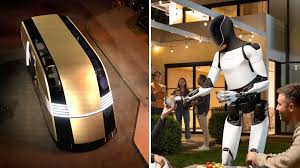
On October 10, 2024, Tesla unveiled its vision for the future of autonomous transportation at the highly anticipated "We, Robot" event held at Warner Bros. Studios in Burbank, California. This comprehensive analysis examines the key announcements, technological implications, and potential impact on the autonomous vehicle industry.
Executive Summary
The event marked a pivotal moment in Tesla's strategic direction, introducing three major innovations: the Cybercab dedicated robotaxi, an updated Robovan concept for mass transit, and significant advancements in the Optimus humanoid robot program. These announcements signal Tesla's ambitious timeline to transition from an automotive manufacturer to a comprehensive autonomy and robotics company.
The Cybercab: Redefining Urban Mobility
Tesla's Cybercab represents a fundamental departure from traditional vehicle design philosophy. As a purpose-built autonomous vehicle, it eliminates conventional controls entirely—no steering wheel, no pedals, and no manual override capability. This design decision reflects Tesla's confidence in their Full Self-Driving (FSD) technology.
Technical Specifications
| Specification | Details |
|---|---|
| Passenger Capacity | 2 passengers |
| Doors | Butterfly-style opening mechanism |
| Controls | Fully autonomous (no manual controls) |
| Charging | Inductive (wireless) charging capability |
| Projected Cost per Mile | $0.20 (vs. $1.00+ for traditional rideshare) |
| Target Production Date | 2026-2027 |
| Estimated Base Price | Below $30,000 |
Robovan: Scaling Autonomous Transit
Complementing the Cybercab, Tesla introduced the Robovan—a high-capacity autonomous vehicle designed for group transportation. With capacity for up to 20 passengers, this vehicle targets the intersection of public transit and ride-sharing services.
The Robovan's potential applications extend beyond passenger transport to include goods delivery and specialized commercial services. Its modular interior design allows for rapid reconfiguration between passenger transport, package delivery, and mobile service applications.
Optimus: The Humanoid Robot Evolution
Perhaps the most significant long-term announcement was the demonstration of Optimus robots operating autonomously throughout the event venue. Unlike previous demonstrations, these units showcased capabilities previously unseen in public settings:
- Natural Language Interaction: Attendees engaged in unscripted conversations with Optimus units, demonstrating advanced natural language processing capabilities
- Dexterous Manipulation: Robots performed complex tasks including beverage service and small object handling
- Environmental Navigation: Units navigated crowded, dynamic environments without pre-mapped data
- Multi-robot Coordination: Multiple Optimus units demonstrated synchronized actions, suggesting advanced swarm coordination capabilities
Regulatory and Safety Considerations
The absence of manual controls in the Cybercab raises significant regulatory questions. Current federal and state regulations in most jurisdictions require vehicles to have traditional control interfaces. Tesla's timeline assumes favorable regulatory evolution, which remains the primary uncertainty in the production schedule.
Key Regulatory Challenges:
- Federal Motor Vehicle Safety Standards (FMVSS) compliance for control-less vehicles
- State-by-state autonomous vehicle operation permits
- Liability frameworks for fully autonomous passenger transport
- Insurance industry adaptation to autonomous fleet operations
Competitive Landscape Analysis
Tesla's announcements position the company against established robotaxi operators including Waymo (Alphabet) and Cruise (General Motors). However, Tesla's approach differs fundamentally:
- Sensor Strategy: Tesla maintains its camera-only perception approach, while competitors rely on LiDAR-based systems
- Scale Advantage: Tesla's existing fleet provides billions of real-world driving miles for training data
- Vertical Integration: In-house chip design (Dojo) and manufacturing capabilities offer cost advantages
- Business Model: Planned network allowing private owners to monetize vehicle idle time
Conclusion: Implications for the Future of Mobility
The "We, Robot" event represents Tesla's most ambitious articulation of its long-term vision. While the aggressive timelines warrant measured skepticism—given Tesla's historical pattern of delayed deliveries—the technological trajectory demonstrated is undeniably significant.
The convergence of autonomous vehicles and humanoid robotics under a unified AI development framework suggests Tesla's strategy extends far beyond automotive manufacturing. If executed successfully, these technologies could fundamentally reshape urban transportation, labor markets, and the very nature of personal mobility.
The question is no longer whether this future will arrive, but when—and how society will adapt to its implications.